

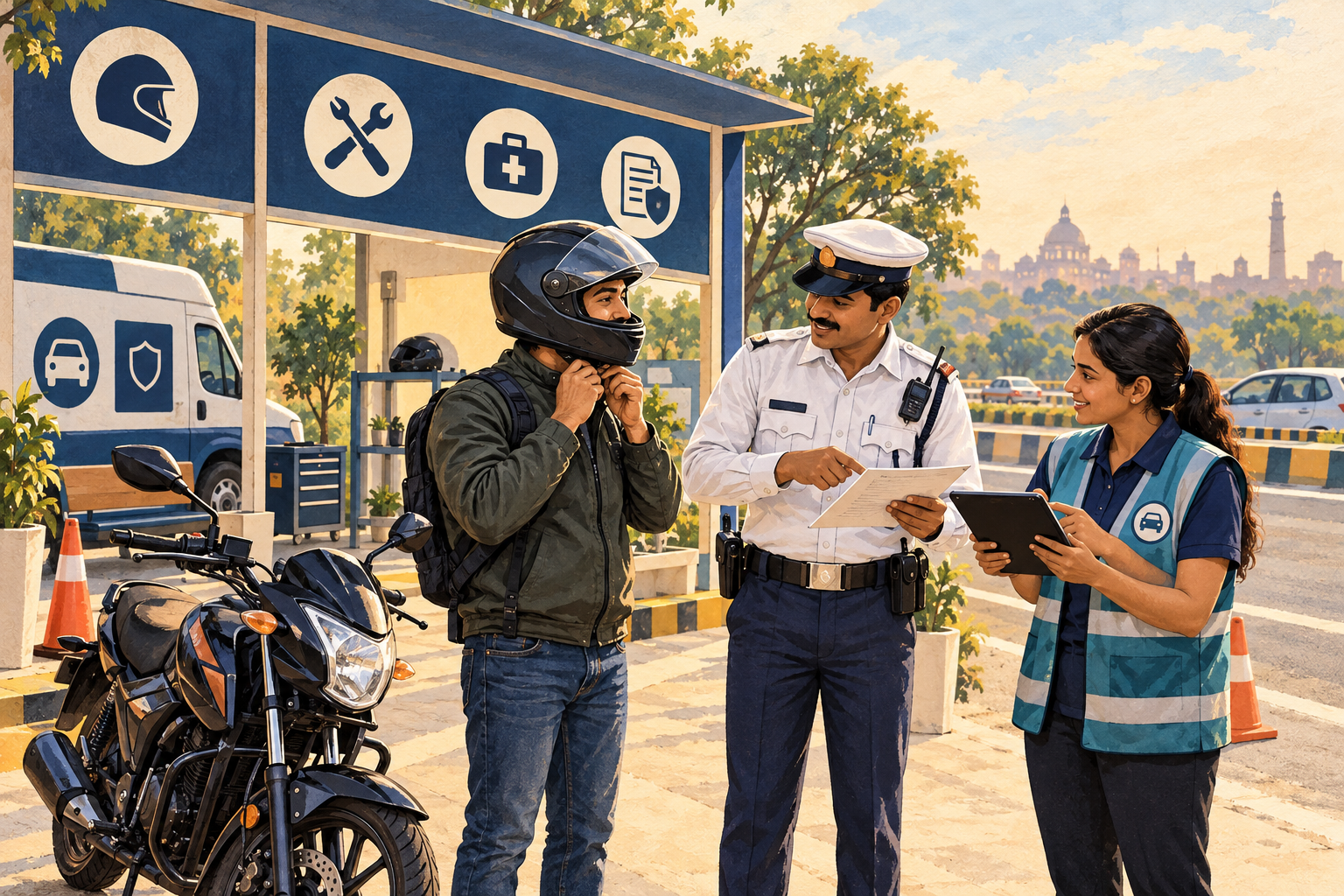
A helmet fine can leave a rider poorer but still without a helmet. An insurance challan does not itself produce an insurance policy. That gap suggests a useful reform: combine lawful enforcement with an immediate way to become safer and compliant.
Offer access to a properly fitted certified helmet and authorised insurance assistance near selected traffic checkpoints. The aim should be fewer unsafe journeys, not a sales target or a growing collection of fines.
Helmet safety is more than a private gamble
A rider may see helmet use as personal choice, but serious injury also affects dependants, emergency responders and people who provide long-term care. A crash can change an entire household’s life. The answer to an unsafe journey should be prevention, not indifference to whether the rider survives.
The WHO helmet-safety manual supports quality helmets, correct use and effective helmet laws as measures that reduce fatal and serious head injuries. A helmet reduces injury risk; it does not make speeding, drink-driving or poor roads safe.
Under section 129 of the Motor Vehicles Act, qualifying motorcycle riders and passengers must wear protective headgear meeting the prescribed standard, subject to statutory exceptions. Section 194D provides the related penalty. This legal safety purpose cannot be dismissed as merely a revenue measure without evidence about the particular practice being criticised.
Good enforcement should help solve the problem it identifies
Fines can deter violations, but a collection total alone does not show that people became safer. Some riders lack an appropriate helmet; others have one but do not use it. The response should recognise that difference.
The user’s proposal is to collect money and provide a good helmet at the checkpoint. Its strongest feature is immediate practical help. Its risk is turning the power to stop a vehicle into the power to compel a purchase from a preferred seller.
A better pilot would keep enforcement and assistance distinct. Deal with the alleged offence under the applicable procedure, then offer a clearly priced purchase, subsidy or voucher through a separate service. Any policy allowing a purchase or training course to replace or reduce a penalty would need lawful authorisation; an officer cannot simply relabel a fine as a product payment.
What a useful helmet service would provide
- Genuine certification: source helmets complying with the applicable BIS standard. The Helmet Quality Control Order requires conformity and the BIS Standard Mark under licence for covered products.
- Fit and fastening: offer suitable sizes, explain the retention strap and avoid handing out whatever stock happens to be available.
- Traceability: provide an invoice, warranty information and supplier details. The government’s consumer guidance points to BIS Care and BIS licence verification.
- Choice: no compulsory purchase from the checkpoint’s seller, and no repeated purchase requirement for someone who already owns a compliant helmet.
- A safe next step: where a rider has forgotten a helmet, support lawful arrangements to obtain it or alternative transport rather than presenting payment as permission to keep riding unprotected.
Buying a helmet might improve use, but that behavioural effect must be measured. Already owning a helmet has not eliminated non-use. Repeatedly making the same person buy another one would be wasteful and could reward the wrong incentives.
Versions of this idea have been tried before
An ANI video report carried by Business Standard on 22 January 2018 describes Udhampur police distributing helmets rather than issuing challans during a campaign. It shows that combining safety education with access to equipment is not an entirely new idea.
A short campaign report does not establish long-term crash reduction, financial sustainability or a current right to demand a helmet instead of a penalty. A modern pilot should publish its legal basis and evaluate results, rather than assume an appealing launch event proves success.
Insurance assistance is possible—but a premium is not a fine
IRDAI’s consumer guidance identifies third-party liability cover as mandatory for vehicles using public roads. Sections 146 and 196 of the Motor Vehicles Act address the requirement and the offence. This protection concerns other people affected by a crash, not only damage to the owner’s vehicle.
A checkpoint help desk could help an owner check policy details and reach an insurer or appropriately authorised intermediary. The insurer must handle issuance, required checks and the applicable terms. Traffic personnel should not promise that any payment to them creates cover.
Before a journey resumes, verify the issued policy and its effective date and time. A purchase cannot retrospectively insure an accident that has already occurred, and it does not automatically erase an earlier offence. Not every lapsed policy or type of cover can be completed instantly.
Keep the challan, helmet invoice and insurance premium as separate transactions. Show the insurer, coverage, period, price and receipt, obtain informed consent, and avoid bundling optional covers into a mandatory purchase.
Partnerships can help; party branding should not be the price of help
Helmet makers and insurance providers could contribute through openly procured services, transparently funded discounts or properly governed sponsorship. Publish the selection process, pricing, conflicts and complaint channel. Officers should have no personal sales incentive, and providers should not receive privileged access to enforcement data.
Putting the ruling party’s logo on a helmet might attract publicity, as the proposal suggests. Our editorial recommendation is different: use neutral public-safety branding. The service is for every resident, including those who support another party. Nobody should have to display a political message to access publicly organised safety assistance.
A government can earn public credit by delivering a useful service. Making profits or party promotion a checkpoint objective risks recreating the very distrust the reform is meant to solve. Any cost recovery should be transparent and subordinate to safety.
What public discussion adds—and what it cannot prove
A public Reddit discussion proposes charging for a helmet at the stop instead of issuing only a fine. Responses raise practical concerns such as stock and logistics. This is a discussion sample, not a survey of riders or evidence of universal support.
A CarToq report dated 20 December 2025 describes an Instagram video attributed to traffic officer Vivek Anand Tiwari, in which helmet fit becomes the issue. We could verify the report, but not the original reel permalink or its recording circumstances. Treat it as reported social content, not a legal exemption or an independently authenticated encounter.
These examples support asking whether assistance can improve compliance. They do not establish that all officers misuse fines or that a particular seller should receive an exclusive contract.
Run a pilot and measure safety, not sales
Use a safe off-road bay with trained staff, several helmet sizes, reliable payment systems and an option for people without smartphones. Do not obstruct traffic or create rushed sales decisions under pressure. Provide a complaint route and a way to challenge an incorrect notice.
Publish helmet-use observations after the intervention, repeat violations, completed insurance coverage, complaint outcomes and programme costs. Examine injuries over a sufficient period with a credible comparison; a few positive videos are not a causal evaluation.
The test is whether people leave safer and stay compliant. Respectful enforcement, practical help and honest measurement can work together. Collecting more money is not the measure of success.
Research cutoff: 5 October 2026. This is a proposed service model, not an existing nationwide entitlement. Current local enforcement arrangements and insurer terms must be checked before implementation. No claim is made that a purchase cancels a lawful penalty.